Trong bài này
✓ Bending Radius là gì?
✓ Vì sao không nên uốn cáp quá gấp?
✓ Corrugated Conduit hỗ trợ như thế nào?
✓ Những lỗi thường gặp.
Bending Radius là gì?
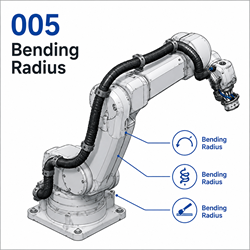
Bending Radius là bán kính uốn nhỏ nhất mà cáp có thể chịu được trong quá trình làm việc mà không làm giảm tuổi thọ.
Nếu cáp bị uốn nhỏ hơn giới hạn cho phép, ứng suất cơ học sẽ tăng nhanh và làm cáp xuống cấp sớm.
Vì sao bán kính uốn quan trọng?
Một bán kính uốn phù hợp sẽ giúp:
✓ Giảm Mechanical Stress.
✓ Hạn chế gãy lõi dẫn điện.
✓ Bảo vệ lớp cách điện.
✓ Kéo dài tuổi thọ cáp.
Corrugated Conduit hỗ trợ như thế nào?
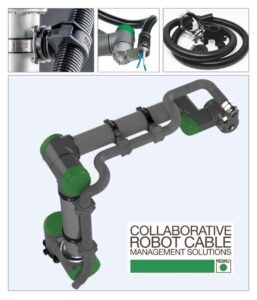
Corrugated Conduit và các phụ kiện của REIKU không quyết định bán kính uốn của cáp, nhưng giúp duy trì đường đi ổn định, tránh các điểm uốn quá gắt hoặc cọ sát trong quá trình chuyển động.
Khi được lựa chọn và lắp đặt đúng:
✓ Cáp chuyển động tự nhiên hơn.
✓ Giảm ma sát với kết cấu máy.
✓ Hạn chế hiện tượng xoắn và kéo căng.
✓ Tăng độ tin cậy của hệ thống.
Những lỗi thường gặp
✓ Uốn cáp nhỏ hơn khuyến cáo của nhà sản xuất.
✓ Cố định conduit không đúng vị trí.
✓ Để cáp bị xoắn trong conduit.
✓ Chọn phụ kiện không phù hợp.
Engineering Notes
✓ Bending Radius là thông số cần được xem xét ngay từ giai đoạn thiết kế.
✓ Một hệ thống Cable Protection tốt sẽ giúp duy trì bán kính uốn ổn định trong suốt quá trình vận hành.
Về PT
Công ty TNHH Phúc Thịnh Hải Phòng là đại diện ủy quyền của REIKU GmbH tại Việt Nam, cung cấp các giải pháp Cable Protection System cho robot công nghiệp, tự động hóa và các ứng dụng chuyển động liên tục.
Tuyên bố miễn trừ trách nhiệm
Nội dung bài viết được biên soạn nhằm mục đích chia sẻ kiến thức và kinh nghiệm kỹ thuật, phục vụ tham khảo trong các ứng dụng công nghiệp. Mặc dù Công ty TNHH Phúc Thịnh Hải Phòng (PT) luôn cố gắng đảm bảo tính chính xác của thông tin tại thời điểm đăng tải, bài viết có thể chưa đầy đủ hoặc không còn phù hợp trong một số trường hợp cụ thể. Người đọc nên tham khảo thêm tài liệu kỹ thuật chính thức của nhà sản xuất hoặc trao đổi với chuyên gia trước khi áp dụng vào thiết kế, lựa chọn sản phẩm hoặc vận hành thực tế. PT không chịu trách nhiệm đối với bất kỳ thiệt hại trực tiếp hoặc gián tiếp nào phát sinh từ việc sử dụng các thông tin trong bài viết này.
by ENGLISH …
Bending Radius – Why Does It Matter for Robot Cable Life?
In this article
✓ What is Bending Radius?
✓ Why should cables never be bent too tightly?
✓ How does a Corrugated Conduit help?
✓ Common installation mistakes.
What is Bending Radius?
The Bending Radius is the minimum radius at which a cable can be bent without reducing its expected service life.
Bending a cable below the recommended radius significantly increases mechanical stress and may lead to premature failure.
Why is it important?
A proper bending radius helps:
✓ Reduce Mechanical Stress.
✓ Protect cable conductors.
✓ Prevent insulation damage.
✓ Extend cable service life.
How does a Corrugated Conduit help?
A Corrugated Conduit and matching REIKU fittings do not define the cable’s bending radius, but they help maintain a controlled cable path and reduce sharp bends during movement.
A properly designed system can:
✓ Guide cable movement.
✓ Reduce abrasion.
✓ Minimize twisting and tensile stress.
✓ Improve long-term reliability.
Common mistakes
✓ Bending cables below the recommended radius.
✓ Incorrect conduit mounting.
✓ Twisted cables inside the conduit.
✓ Using unsuitable fittings.
Engineering Notes
✓ Bending Radius should always be considered during the design stage.
✓ A well-designed Cable Protection System helps maintain consistent cable movement and long-term reliability.
About Phuc Thinh Hai Phong (PT)
Phuc Thinh Hai Phong Co., Ltd. is the exclusive authorized representative of REIKU GmbH in Vietnam for Cable Protection Systems.
PT provides technical consultation and genuine cable protection solutions for robotics, automation and continuously moving industrial applications.
Disclaimer
This article is provided for general technical information and reference purposes only. While Phuc Thinh Hai Phong Co., Ltd. (PT) makes every effort to ensure the accuracy of the information at the time of publication, the content may not be complete or applicable to every specific application. Readers are encouraged to consult official manufacturer documentation or qualified engineering professionals before making design, product selection or operational decisions. PT shall not be liable for any direct or indirect loss or damage arising from the use of the information contained in this article.
